SEO Isn’t Just About Getting Traffic—It’s About Building Trust and Long-Term Visibility
If you ask ten different business owners what they want from Search Engine Optimization (SEO), nine of them will probably give you the exact same answer: “More traffic.”
It’s an understandable answer. On the surface, SEO looks like a math game. You target the right keywords, build enough backlinks, rank on page one of Google, and watch the pageviews roll in.
But treating SEO strictly as a traffic engine misses the real power of search.
Over the last few years, search engine algorithms—and searchers themselves—have evolved dramatically. Today, high-ranking pages aren’t just the ones that played by technical rules; they are the ones that earn user confidence.
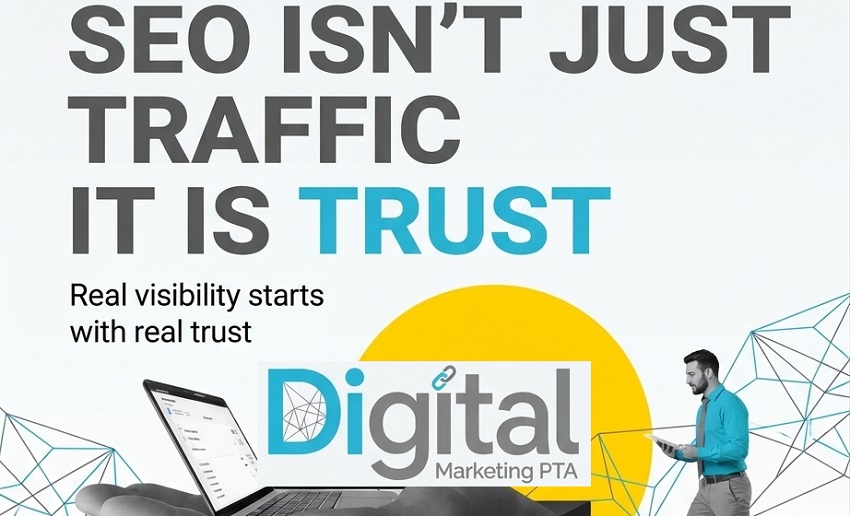
SEO isn’t just about getting traffic. It’s about building trust and achieving long-term, sustainable visibility.
The Flaw in the “Traffic-First” Mindset
Imagine opening a storefront on the busiest street in town. Thousands of people walk past your doors every single day. A few hundred walk in out of curiosity. But once inside, they find confusing signs, pushy sales pitches, or products that don’t match what was advertised outside.
What happens? They leave immediately—and they don’t come back.
That is precisely what happens when you optimize exclusively for traffic:
- You get clicks from people who aren’t looking for what you actually offer.
- Visitors land on pages designed for search spiders instead of human beings.
- High bounce rates signal to search engines that your content failed to satisfy the user’s intent.
Driving traffic without building trust is like pouring water into a leaky bucket. You might see a momentary spike in hits, but it won’t translate into real business growth, loyal audience members, or lasting domain authority.
Why Search Engines Prioritize Trust
Google’s primary goal isn’t to help businesses rank—it’s to keep searchers satisfied so they continue using Google. To do that, the search algorithm must reward sites that offer genuine value, expertise, and safety.
This is where framework principles like E-E-A-T (Experience, Expertise, Authoritativeness, and Trustworthiness) come in. Search platforms actively look for signals that show you are a reliable source:
- Demonstrated Experience: Have you actually used the product, solved the problem, or worked in the field?
- Clear Expertise: Is the content accurate, well-researched, and written by someone who understands the topic deeply?
- Authoritative Reputation: Do other respected sites in your niche cite you, link to you, and refer to your brand?
- Trustworthiness: Is your site secure, transparent about who wrote the content, and clear in its intent?
Notice that none of these signals rely on “tricking” an algorithm. They rely on proving to both search engines and humans that you are a dependable authority.
Building Trust Translates to Long-Term Visibility
Tactical hacks or trend-chasing might bring a temporary traffic bump, but algorithm updates routinely sweep away sites built on thin foundations. When you shift your SEO strategy toward building authority and user trust, you build compounding, long-term visibility.
Here is how that shift changes your search strategy:
- From “Keyword Stuffing” to “Answering Intent”
Instead of asking, “How many times can I fit this keyword onto the page?” trust-based SEO asks, “What is the reader trying to solve, and how can I give them the clearest, most thorough answer possible?” When you solve a user’s problem completely, they remember your brand.
- From “Clickbait Headlines” to “Delivering on Promises”
A catchy title gets the click; helpful content keeps the visitor. When your headline accurately reflects the content—and the content delivers real value—you build immediate credibility with the reader.
- From “Link Quantity” to “Relationship Building”
High-trust SEO focuses on earning links naturally because your resources, insights, or original research are worth sharing. A few links from industry leaders do far more for your visibility than hundreds of low-quality directory links.
How to Align Your SEO Strategy with Trust
If you want search engine optimization to yield predictable, long-term results for your brand, focus on these actionable steps:
- Publish Original Insights: Share real case studies, proprietary data, unique angles, or firsthand experiences that cannot be replicated by automated content generators.
- Optimize the User Experience (UX): Make sure your site loads fast, works seamlessly on mobile devices, and features clean, distraction-free typography. A site that feels broken or covered in intrusive pop-ups instantly loses trust.
- Be Transparent: Make author credentials visible, link out to reliable secondary sources, and provide straightforward contact info and privacy policies.
- Focus on Topical Depth: Rather than writing one-off posts on completely unrelated topics, build comprehensive content hubs around your core expertise to show search engines you cover your subject thoroughly.
Traffic is a metric; trust is an asset.
When you treat SEO as a way to consistently deliver value, educate your audience, and solve real problems, traffic stops being something you have to chase. It becomes the natural byproduct of being the best, most trusted resource in your space.
Build for trust first—the search engines, and the traffic, will follow.
AUTHOR:
-
Phone / WhatsApp: +27 64 246 3678
-
Email: info@digitalmarketingpta.co.za
-
Website: www.digitalmarketingpta.co.za